Transformation of Technique in Shaolin
Transformation in Shaolin Kung Fu
The Living Principle of the Shaolin Five Form Fist and Shaolin Butterfly Style
In Shaolin Kung Fu, transformation is not a metaphor.
It is a functional requirement, a training principle, and ultimately, a way of life.
Across the Shaolin Five Form Fist (Wu Xing Ch’uan Fa) system — and especially within the Shaolin Butterfly Kung Fu style — transformation refers to the practitioner’s ability to change naturally, fluidly, and appropriately from one state to another, without hesitation or rigidity, as conditions demand.
This applies on every level:
- From one technique to another
- From one sub-style to another
- From external to internal
- From hardness to softness
- From conflict to resolution
- And ultimately, from ego-bound action to awakened awareness
The diagrams associated with the Five Form system are not merely academic charts. They are maps of transformation — showing how all authentic Shaolin arts interconnect, overlap, and inform one another.
Transformation as a Martial Skill
On a technical level, transformation means the ability to move seamlessly and naturally between methods without conscious strain.
In practice, this looks like:
- Striking that becomes deflection
- Deflection that becomes Chin-na
- Chin-na that becomes a takedown
- A takedown that resolves the encounter without excess force, as a controlling action
In the Five Form Fist system, this is expressed through the integration of:
- Striking
- Kicking
- Grappling
- Chin-na (seizing and control)
- Counters and transitions
No single category stands alone. Each contains the seed of the others.
A skilled Shaolin martial artist does not switch styles —
they transform states.
Tiger can become Crane.
Crane can become Dragon.
Dragon can soften into Tai Chi–like yielding.
External force can dissolve into internal control.
This is not choreography. It is responsiveness.
The Five Form Fist System as a System of Transformation
The Shaolin Five Form Fist system reveals something profound:
all authentic Chinese martial arts are variations of the same underlying principles.
Northern Shaolin, Southern Shaolin, Internal Styles, weapons, chin-na, and ch’uan fa are not separate silos. They are expressions of a unified body of knowledge, organized for training clarity.
Transformation occurs when the practitioner has mastered the basics and General Curriculum, and understands:
- When to express force
- When to absorb it
- When to redirect it
- When to dissolve it entirely
In this way, transformation is not about accumulating techniques, but about refining perception and timing.
Shaolin Butterfly Kung Fu: The Art of Continuous Change
In the Shaolin Butterfly style, transformation is not only functional and a result of mastering the training methods — it is symbolic and embodied.
As I was taught, the Butterfly is the heart of the Dragon.
Both are complete systems in their own right.
Both represent change — but in different expressions.
- The Dragon symbolizes spirit, change, power, depth, continuity, and internal mastery
- The Butterfly symbolizes adaptation, lightness, rebirth, constant recycling and transformation of all energies/tecniques
Butterfly Kung Fu emphasizes:
- Fluid footwork
- Change and transformation
- Soft-hard transitions
- Continuous evolution of position, technique, application and intent
Butterfly does not meet force head-on.
It changes the equation.
Just as a butterfly emerges transformed from its cocoon, the practitioner learns to move beyond rigid identity — no longer bound to a single response, a single tactic, or a single way of being.
Transformation Between External and Internal Arts
One of the hallmarks of advanced Shaolin training is the ability to transition naturally between external and internal expression.
A moment may require:
- Strong stance and decisive technique
The next may require:
- Yielding
- Listening
- Neutralizing
- Leading the opponent into emptiness
This is where Shaolin Kung Fu and Tai Chi truly meet — not as separate styles, but as complementary expressions of the same principle.
Transformation is the bridge.
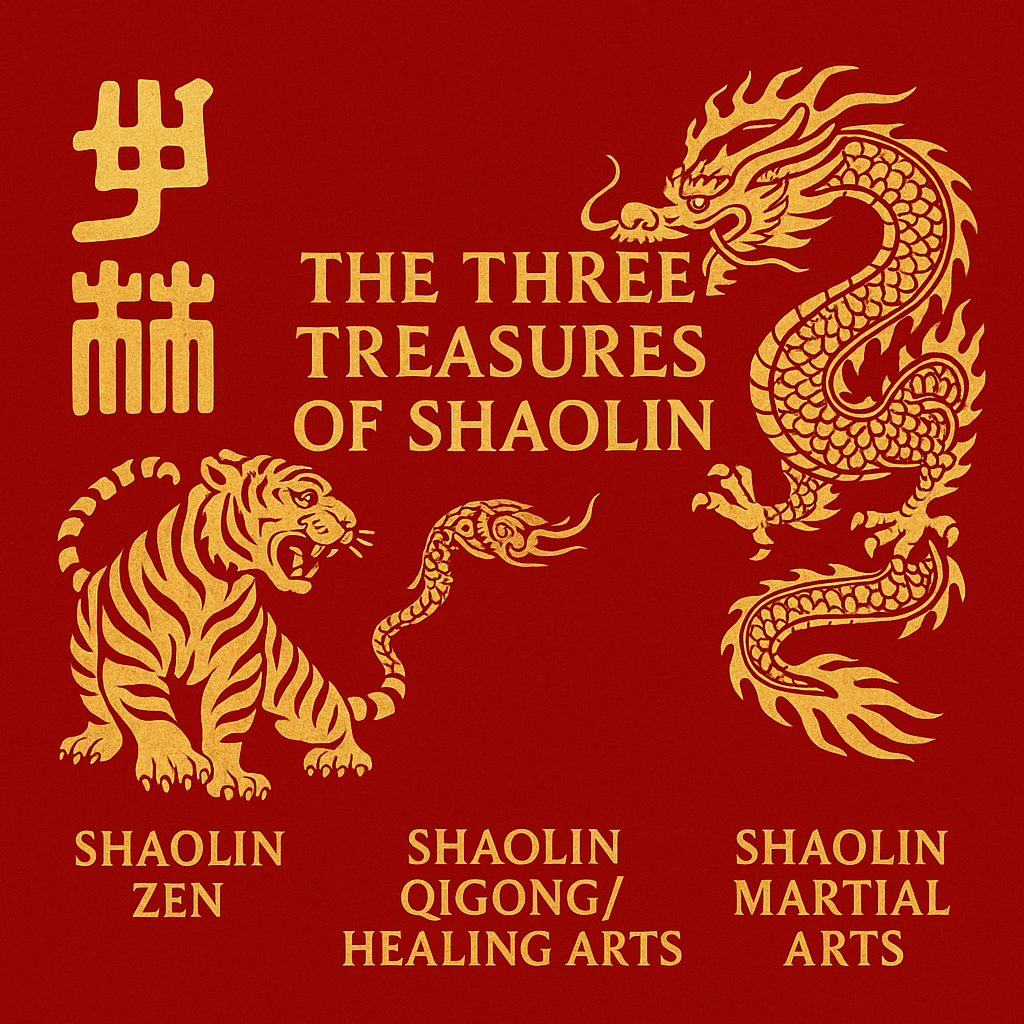
Spiritual Transformation and the Three Treasures of Shaolin
At its highest level, transformation in Shaolin Kung Fu is inseparable from the Three Treasures:
1. Shaolin Kung Fu (Martial Practice)
2. Shaolin Qigong (Energy Cultivation)
3. Shaolin Chan / Zen (Spiritual Realization)
Martial transformation refines the body.
Qigong refines the breath and energy.
Chan refines the mind and heart.
The ultimate goal of Shaolin Chan is the realization of one’s true nature — what Buddhism refers to as Buddha Nature.
For non-Buddhists, this same process can be understood through other lenses:
- Personal evolution
- Ethical development
- Service to others
- Living in harmony with one’s values
In Jewish tradition, this is expressed as tikkun olam — repairing the world through conscious action.
Different language.
Same transformation.
Transformation Beyond the Training Hall
Shaolin Kung Fu was never meant to stay inside the school.
Transformation shows up in:
- How we respond to conflict
- How we handle pressure
- How we adapt to change
- How we treat others
- How we refine our character
A practitioner who can transform technique but not temperament has missed the deeper lesson.
True mastery is the ability to remain grounded, adaptable, and compassionate — even under stress.
Closing: Living the Art of Transformation
Shaolin Five Form Fist and Shaolin Butterfly Kung Fu are not systems of memorization.
They are paths of transformation.
To train Shaolin Kung Fu authentically is to train:
- Body
- Mind
- Spirit
- Character
The ultimate transformation is not becoming someone else —
but becoming fully, authentically yourself, free from rigidity, fear, and limitation
That is the heart of the Butterfly.
That is the depth of the Dragon.
That is the living legacy of Shaolin.